Posts

Mobile Applications Basics

Image
Current Context Current days, mobile applications became more and more popular than other applications like desktop applications and web applications. The reason is portability and usability. Technology trend of current days quickly moving to smart devices like tablets pcs, smartphones etc. The popularity of desktop pcs and laptop pcs becoming decreasing day by day. When we considering the people in current days, most of them have at least one smartphone. And the hardware specifications are also becoming increasing and they got more powerful. What about web applications As the reason of improvement in the mobile industry, software developers tend to develop web applications since they are more flexible and can be made to meet requirements for desktop pcs and at the same time they can fulfill the requirements for mobile devices. With the improvements of CSS technologies and CSS frameworks like Bootstrap , web applications can adapt to the screen size of the device that curre...
CSRF Defence - Synchronizer Token Pattern Demo

Image
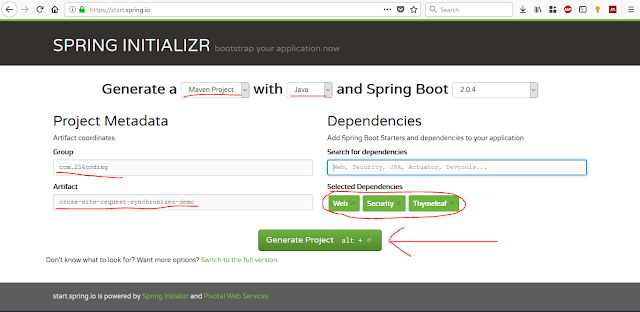
I have wrote some theoretical background of CSRF and CSRF prevention mechanisms in previous posts. If you don't have much idea about what CSRF and how prevention mechanisms works, please go back and read them first. These are the links for them. Cross Site Request Forgery (CSRF) CSRF Defence - Synchronizer Token Pattern From here onword, I assume you have the basic idea of concept of CSRF attack and prevention mechanisms. So, lets get started. This post is fully practical based one. At them end of this, There will be fully functioning web based application to demonstrate how CSRF attack works and how to prevent it using synchronizer token pattern. So, in order to follow this, you will need to setup your development environment first. These are the technologies I used to develop this demonstration application. Technologies Java 8 Spring Boot Framework Spring Security Maven Bootstrap 4 (Optional, Just for enhance the look and feel) Integrated Development Environmen...

CSRF Defence - Double Submit Cookie Pattern

Image
This is the third post I write about CSRF protection. If you didn't read first and second posts. Read them first. Let's start! Double Submit Cookie Pattern is another method used to prevent from CSRF Attacks. This is very similar to synchronizer token pattern . The difference is CSRF token will not store in server. Instead of storing in server, It will store as a cookie in browser. Furthermore, token value will be sent in header or body in every request. In nutshell, With this pattern, in each client to server request, client send CSRF token within body/header and as a cookie. In the server, it will check weather body/header and cookie has same value of CSRF token or different. Server will only execute operation only if body/header and cookie values same. This is a sample client to server request with double submit cookie pattern. If you have any queries, questions, suggestions, Please add comment. Thank you

CSRF Defence - Synchronizer Token Pattern

Image
This is the continuation of previous blog post CSRF . If you didn't read it, please read it first because concept of CSRF attack is described there. As I mentioned in earlier post, there are 3 CSRF prevention mechanisms. Synchronizer Token Pattern is one of that. First I will explain how some person log into system and do some work within the system. As the first step, user will log into the system using login screen. That is the place where authentication happen. After giving correct user credentials (Username and Password), System will give the permission to access protected area in the system. Now the system know who is the logged person. But there is a problem. That is because we are using HTTP (Hyper Text Transfer Protocol) in web applications and it is not statefull protocol. So we need to keep maintain state of the logged person in the system. This is the place where cookie comes into play.  😏 (🍪 Not the cookie we eat). Cookie is a small data item stored in the web br...

Cross Site Request Forgery (CSRF)

Image
When we using computers, it would be better if we know about security risks also. Therefore today I will consider about computer security problem. I'm writing this post to talk about a common type of cyber attack which named Cross Site Request Forgery (CSRF). Lets talk about what is this CSRF means? This is a kind of attack used by hackers to execute some action that wanted by hacker with the authorization of end user (legitimate user). To make it more clear, I will take some example. This is the story. There are two characters named John and Robert. Both of people have a facebook account and John have some photos uploaded into his facebook account. But that photos can be viewed only by the friends of John. Robert is not a friend of John and so Robert cannot view them. However he needs to view that photos. One option he has is to be a facebook friend of John. But the problem is John does not want to be a facebook friend with Robert. What can robert do? According to the abo...

To Basic Step to NoSQL (with MongoDB)

Image
This article is written to Introduce to a kind of new database type which means NoSql Databases. I hope this will help peoples who familier with SQL databases and not familier with NoSql databases. What is NoSQL Database. In simple, these kind of Databases are not use SQL (Structured Query Language) for database operations. In usual SQL databases, data is stored in table structure. To make db operations, we use SQL language Ex:         SELECT * FROM Users; I'm not going to describe more about SQL Databases. You can refer this to learn about SQL So NoSQL Databases use JSON documents, Tree structures, Graphs like things. Here I will use Mongo DB. You can make database operations in Mongo DB using methods. Mongo DB Mongo DB is a one of commonly used NoSQL database in now a days. It was initially released in 2009. It was written C++. It runs in multiple platforms. And it is compleately free. MongoDB has items called collections which similer...